








Vocal Course
Home >> Vocal course
Vocal
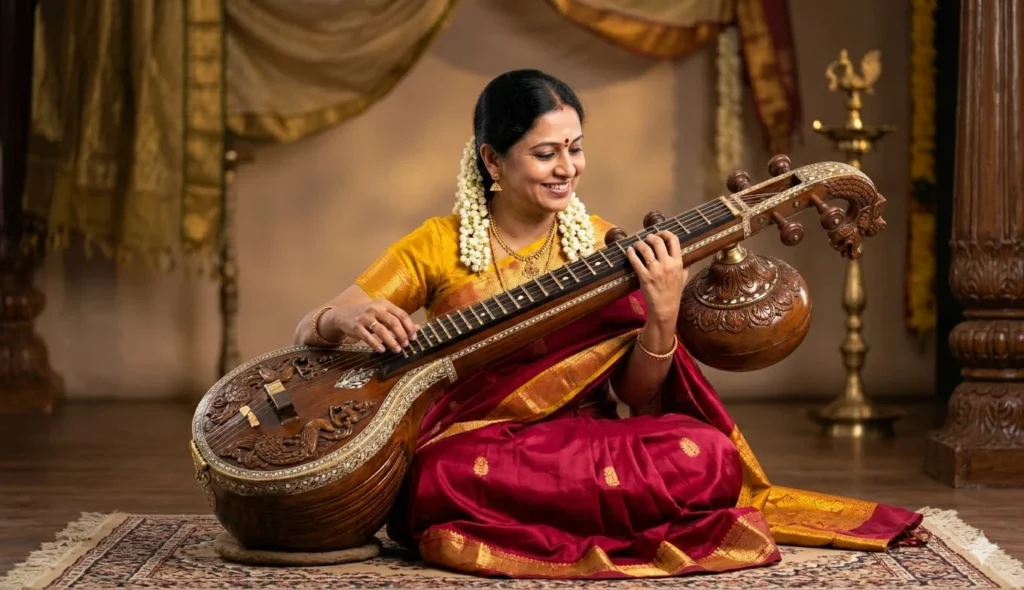
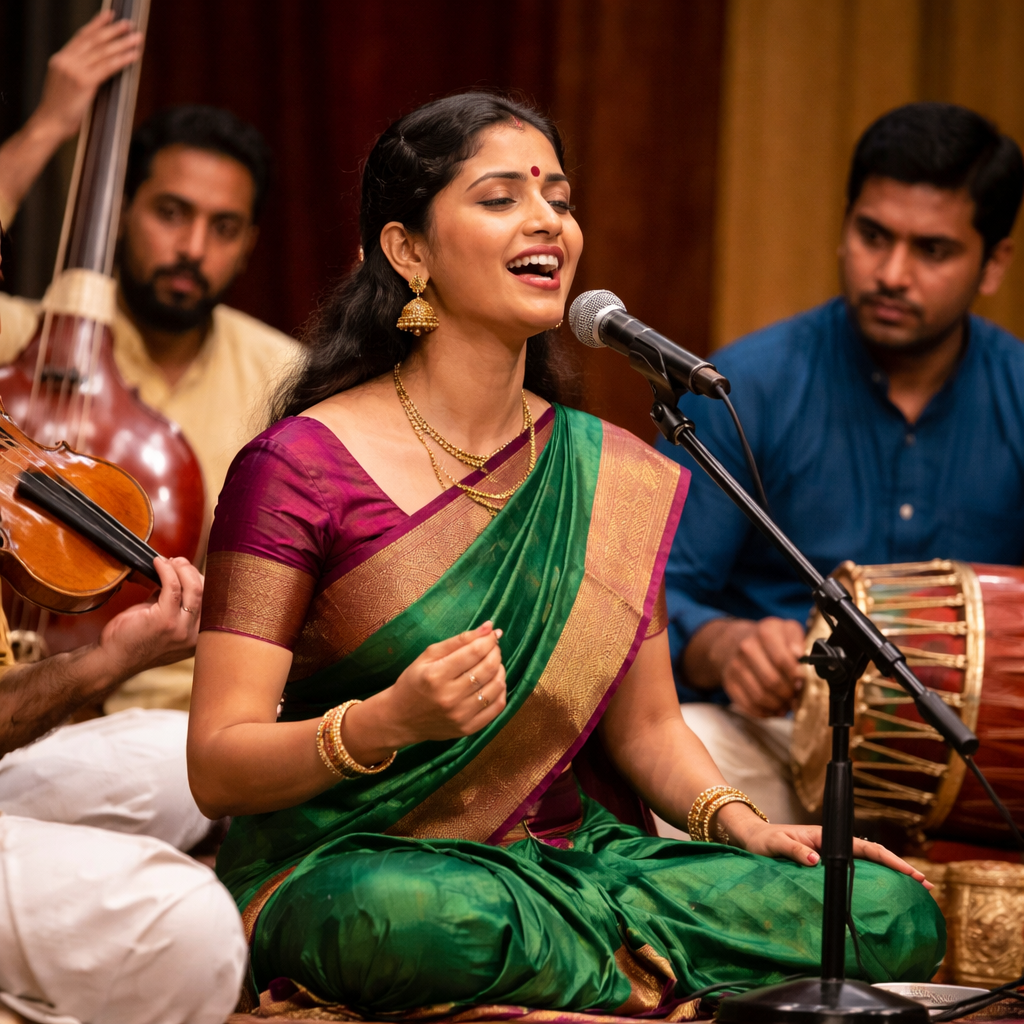
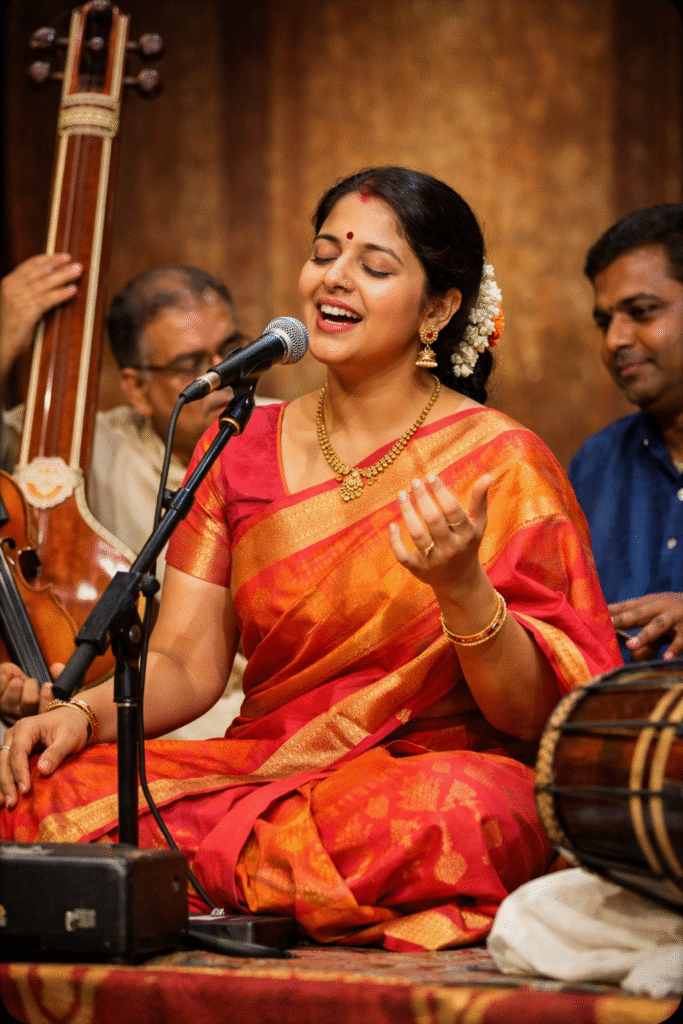
The origin of Indian classical music is as old as Vedas and it has originated from Samaveda; there evolved the main genre of Indian classical music; Karnataka Sangeetham or Carnatic Music.
Emphasized on vocal music particularly; most compositions are written to be sung, and even played on instruments. Carnatic Music is very ancient and its roots go back 3000 years. The core parts of Indian classical music, Nadam(sound),Swaram(notes), Layam(Rhythm), are said to have originated from recitals of mantras in Vedas. Following that, the famous musicologists who came after incorporated Nadam,Swaram,Thalam and also shaped Ragas from these, provided examples and explanations in their treatises. That is how the ancient Carnatic music tradition evolved into its latest contemporary version. Karna-Ear; Ataka- Soothing/Comfortable for ears or as considered as born in Karnataka. This genre of music flourished and spread in purely states of South India; Andhra Pradesh, Tamil Nadu and Kerala.Venerated as a symbol of Nada Brahma, this divine art form originated from ancient texts.
The Musicologists who came thereafter organized these Ragas and Talas in a perfect manner. Around the 14th century music became a powerful medium of devotion. Then after, the famous composers like Purandharadasa and Annamacharya composed devotional compositions for worshiping the God. This became one of the reasons to attract common man in the field of carnatic music. From that time, learning music became a penance. Later lots of musicians worked hard to make carnatic music in the current structured manner.
Among these, Saint Thyagaraja, Muthuswami Dikshitar and Syama Sastrikal are regarded as the Trinity of Carnatic Music. Then their own contemporary Swathi Tirunal. Owing to influences of various kinds, the traditional codified carnatic music has much significance in the social and political context. Subsequently, lots of changes happened in the field of carnatic music.
Since its origin, in prehistoric times; the evolution of carnatic music has taken place from chords of nature, extent of musicians and empires, styles and structures of different kinds. India’s literary heritage, performers, instrument makers, players, skilled amateurs all have played an immense role in structuring and formulating music as an art form of today’s. This in turn changed Gurukula system to college/institutes education and to today’s most advanced way of learning platform called “Swaradeeksha School of Music” which comprises Online and Offline Music classes.
Learn music the right way, from the heart
Musical Voyage:
Our Vision in imparting taste of music to aspirants have inspired many in joining us. The quest and thirst for music starts from inborn passion and interest. Obligated to serve scholars, Swaradeeksha is now looking forward to developing itself in imparting extensive training sessions.
Learning Carnatic vocal music is not an insurmountable task. Anyone who has a passion or interest in music can master carnatic music, irrespective of age. The precise and meticulous teaching of Swaradeeksha, and also self-paced learning makes you a good vocal artist.
Swaradeeksha will always be there for you, to achieve your dreams, even if it is to become a good singer, a stage artist, a performer, a music teacher or learning music for your self-happiness or contentment like a relaxation or meditation – We will guide you!
Swaradeeksha will train you with precise vocal warm-ups and exercises. We will guide you in, how to do riyaz (sadhakam), when to do, how much time and how to do in different stages. This will make you capable of singing any genre of music.
As every human is unique, everyone will have a different type of voice. Swaradeeksha makes your voice more melodious without losing that uniqueness. The first step of learning Carnatic music in Swaradeeksha is to mold your voice in a singable way.
Key Elements of
Sruthi(Pitch)
Tala(Rhythm)
Swaras(Notes)
Sthayi (Octave)
Raga(Melody)
- In Swaradeeksha, the 3 basic concepts of daily practice, the Sruthi, Tala and Bhava will be taught and appraised in an extensive manner.
- As students, we prioritize dealing with their needs and necessities.
- We inculcate the students with vocal warm ups and exercises that lays the foundation of learning and practicing music.
- We create daily, weekly practice regimens which are short and regular that makes sessions more interesting and hassle-free.
- Swaradeeksha sets the goals owing to the students needs and calibre.
- Our teachers engage with students frequently. Regular teaching practices help in studying Rhythm and Structure.
- As training advances, ear training, scales and chord practices will be given accordingly.
- Score and Track your performance through our professional classes.
Where discipline meets musical excellence
Our
Our training includes sessions for all the three stages of learners. Regular classes are given on different aspects of music.
Beginners
Classes for beginners involves:
- Simple Varishas
- Pitch Correcting Varishas
- Voice Strengthening Varishas
- Zig-Zag Note Varishas
- Voice Culturing Varishas
- Rhythm Correcting Varishas
The fundamentals and basic principles of musical texts in Carnatic classicals could be understood by disciples after the completion of these segments.
Practice sessions could vary according to the skills of grasping techniques. Swaradeeksha focuses on uplifting the potential of our students to its fullest capacity irrespective of their base and learning acquiring skills.
Intermediate Level
The next step is to favour intermediate level of learning music – leading them into advanced professional musicians. Here along with Swaras; Sahithyam/Literature in music is also taught.
5 levels in Intermediate includes:
- Geetham - Level 1
- Geetham - Level 2
- Geetham - Level 3
- Jathiswaras - Level 4
- Swarajathis - Level 5
Compositions in different ragas will be taught and assessed in this level.
Advanced Level
The stage of expertise. At this level, we calibrate our students to be an individual performer or a stage performer. Tutelage includes Varnams. It is effectively practiced and extensively used in both learning and performing periods.
The use of Kalpana swarams are taught during this stage of learning. It includes,
- Raga Alapana
- Manodharma Swaras
- Niraval
Advanced state of learning also comprises lessons of varnams, keerthanas, krithis, thillana, padam and javalis.
This comprises of 4 levels:
- Varnas & Kritis - Level 1
- Varnas & Kritis - Level 2
- Other Compositions - Level 3
- Manodharma Sangeetham - Level 4
E-Learning In
Swaradeeksha’s e-learning offers significant advantages including flexibility to learn at one’s own pace and place. It provides consistent, scalable training experiences that can be easily updated, while fostering independent learning and allowing 24/7 access to resources. One to one sessions can be availed in an environment friendly ambience. Easy access and cost-effective sessions in the virtual platform of Swaradeeksha also helps students in enhanced retention.


Students
Lorem ipsum dolor sit amet, consectetur adipiscing elit. Ut elit tellus, luctus nec ullamcorper mattis, pulvinar dapibus leo.
Am finished rejoiced drawings so he elegance. Set lose dear upon had two its what seen. Held she sir how know what such whom. Esteem put uneasy set piqued son depend her others.
Two dear held mrs feet view her old fine. Bore can led than how has rank. Discovery any extensive has commanded direction. Short at front which blind as. Ye as procuring unwilling principle by.
Sense child do state to defer mr of forty. Become but daughters latter but nor abroad wisdom waited. Was delivered gentleman acuteness but daughters. In as of whole as match asked.